December to April (dry season)
$25-150 USD
Vietnamese (English widely spoken in tourist areas)
Vietnamese Dong (VND)
Overview
About Ho Chi Minh City
Ho Chi Minh City — still widely called Saigon — is Vietnam's largest city and its commercial engine, home to around nine million people across its urban core and a wider metropolitan area approaching 14 million. Situated in the south of the country on the western bank of the Saigon River, it functions as the country's busiest port, its financial centre, and the gateway through which most international visitors enter southern Vietnam.
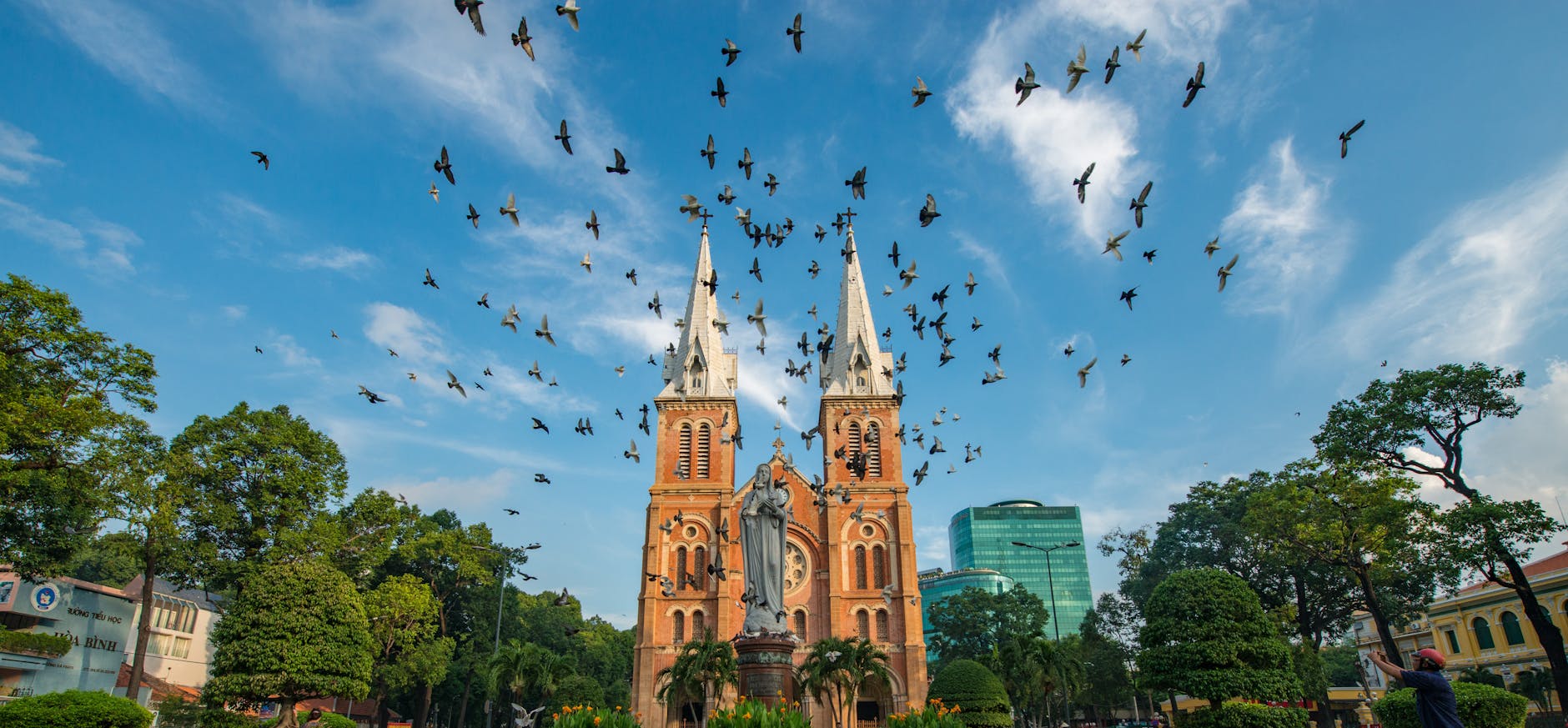
The city's character is defined by contrast and energy. Colonial-era buildings — French pastel facades, the red-brick Notre-Dame Cathedral, the ornate Central Post Office designed by Gustave Eiffel's firm — stand a short walk from glass towers and rooftop bars on the Nguyen Hue Walking Street. The Ben Thanh Market, a covered iron-and-brick hall built in 1914, remains a practical shopping destination for locals despite its tourist fame, and its surrounding streets compose a dense grid of budget guesthouses, pho shops, and travel agencies known as the Pham Ngu Lao backpacker district.
District 1 is the city's commercial and tourist core, containing the historic landmarks, the riverside promenade, and the densest concentration of hotels and restaurants. District 3 adjoins it to the northwest with a more residential character and clusters of independent cafes. The renovated Nguyen Hue boulevard, closed to traffic, is lined with trees and fountains and has become the city's main outdoor gathering space, especially on weekend evenings.
The War Remnants Museum is one of the most visited sites in all of Southeast Asia, presenting an unflinching documentary record of the American War (as it is called in Vietnam) through photographs, equipment, and testimony. The Cu Chi Tunnels — 75 km northwest of the city — provide an underground perspective on wartime guerrilla tactics and draw hundreds of thousands of visitors annually. The Reunification Palace, where the war's final act was played out on 30 April 1975, is now a state museum left largely as it was that day.
The Mekong Delta is the logical companion destination to HCMC. The river delta begins just south of the city, and a day trip by bus or speedboat reaches the fruit-garden islands of My Tho or the floating market at Cai Be within two hours. Can Tho, the delta's largest city with its famous Cai Rang floating market, is a four-hour drive.
The climate is broadly tropical with two seasons: a dry season from December to April and a wet season from May to November. Temperatures rarely drop below 25°C year-round. The city is served by Tan Son Nhat International Airport (SGN), which is about 8 km from the city centre.
Accommodation
Where to Stay in Ho Chi Minh City


Experiences
Things to Do in Ho Chi Minh City
Cu Chi Tunnels Half-Day Tour from HCMC
The Cu Chi Tunnels are 250 km of underground passages used by Viet Cong guerrillas during the American War, now partially open for visitors to crawl through. Guided tours from Ho Chi Minh City take about half a day, including presentations on tunnel warfare tactics and the chance to fire an AK-47 at the on-site shooting range.
Cao Dai Temple and Black Lady Mountain Tour
A full-day tour from HCMC combining the noon prayer ceremony at the Cao Dai Holy See in Tay Ninh — an extraordinary syncretic religion founded in 1926 — with a cable car ride to the summit of Black Lady Mountain. Lunch and round-trip transport are included.
Mekong Countryside Cycling and Boat Tour
A guided cycling and boat excursion through the riverside villages and fruit orchards of the Mekong Delta, stopping at a coconut candy workshop and a local home for lunch. The mix of paddling through narrow canals and cycling along raised dyke paths gives a ground-level perspective on delta life.
Can Gio Mangrove Forest and Monkey Island Tour
A full-day trip south of HCMC into the Can Gio Biosphere Reserve — a vast UNESCO-recognised mangrove forest and wildlife sanctuary — visiting the Monkey Island wildlife area and a wartime historical site. Boat rides through the mangrove channels are a highlight.
Saigon Countryside Guided Bike Tour
A half-day cycling excursion from the city into the rural outskirts of Ho Chi Minh City, passing rice paddies, lotus ponds, and local communities that the bus-tour circuit rarely reaches. Guides explain the agricultural landscape and stop at village workshops and a local restaurant for lunch.
Full-Day Vung Tau Beach Tour from HCMC
Vung Tau is a peninsula resort city on the South China Sea coast, 130 km east of HCMC. This guided full-day tour covers the Giant Jesus statue atop Big Mountain, the Back Beach, and the historic Cap Saint-Jacques lighthouse with return transport and lunch included.
Ba Den Mountain and Cao Dai Temple Private Tour
A private guided day trip to Tay Ninh province combining the iconic Cao Dai Holy See prayer service with a cable car ascent of Ba Den (Black Virgin Mountain), the highest peak in southern Vietnam at 986 m. The tour offers flexibility to linger at each site and includes lunch.
War Remnants Museum Visit
One of Southeast Asia's most visited museums, the War Remnants Museum documents the American War through an extensive collection of photographs, military hardware, and documentary evidence of chemical warfare. Plan at least two hours; the content is deeply affecting.
Practical Info
Ho Chi Minh City Travel Tips
Airport
SGN
Timezone
UTC+7
Currency
Vietnamese Dong (VND)
Population
9.3 million
Information
Frequently Asked Questions
What is the best time to visit Ho Chi Minh City?
How do I get from Tan Son Nhat Airport to the city centre?
What are the must-see sights in Ho Chi Minh City?
Is Ho Chi Minh City safe for tourists?
What food should I try in Ho Chi Minh City?
Do I need a visa to visit Vietnam?
What day trips are possible from Ho Chi Minh City?
How do I get around Ho Chi Minh City?
Ready to explore Ho Chi Minh City?
View all hotels, activities, and detailed information on our full Ho Chi Minh City destination page.
Explore Ho Chi Minh City