When to go
When is the best time to visit Ho Chi Minh City?
Saigon is hot year-round (averaging 27-35 °C) with a distinct wet and dry season. The most comfortable time is the dry season, December to April, when humidity drops, skies clear and temperatures ease slightly. This is the peak tourist window.
- Dec-AprDry season - the best time to visit. Warm, sunny and lower humidity, though March-April are the hottest months before the rains.
- May-NovWet season - hot and humid with heavy afternoon downpours that flood the streets briefly then clear. Quieter, cheaper and the city is at its greenest.
- Late Jan / TetVietnamese New Year falls in late January or February - many businesses close and travel fills up. Fascinating if planned around, tricky if not.
Attractions
Things to Do in Ho Chi Minh City
Saigon is a blur of motorbikes, French-colonial boulevards, war history and some of the best street food on the planet. Two to three days lets you see the highlights before heading to the Mekong or the coast.
War Remnants Museum
The city's most powerful and most-visited museum, presenting the Indochina wars from a Vietnamese perspective through photography, artefacts and the sobering legacy of Agent Orange. Unflinching and essential to understanding modern Vietnam. The Agent Orange exhibit on the top floor is deeply moving, and the courtyard displays a UH-1 helicopter and an M48 tank.
Entry 40,000 VND (~$1.60); 7:30 AM-noon & 1:30-5 PM. Allow 2-3 hours and go early to avoid tour groups.
Cu Chi Tunnels
A vast underground network where Viet Cong guerrillas lived, fought and hid during the war, about 1.5 hours from the city. You can crawl through widened sections, see booby traps, learn the ingenious engineering and even fire an AK-47 at the shooting range. Half-day trips run constantly; combine with the Cao Dai temple. Ben Dinh is the closer and more touristy site; Ben Duoc is quieter and more authentic.
Entry 90,000 VND (~$3.60); tours from ~300,000 VND ($12) including transport - book through your hotel or a tour operator.
Skyline & Rooftop Bars
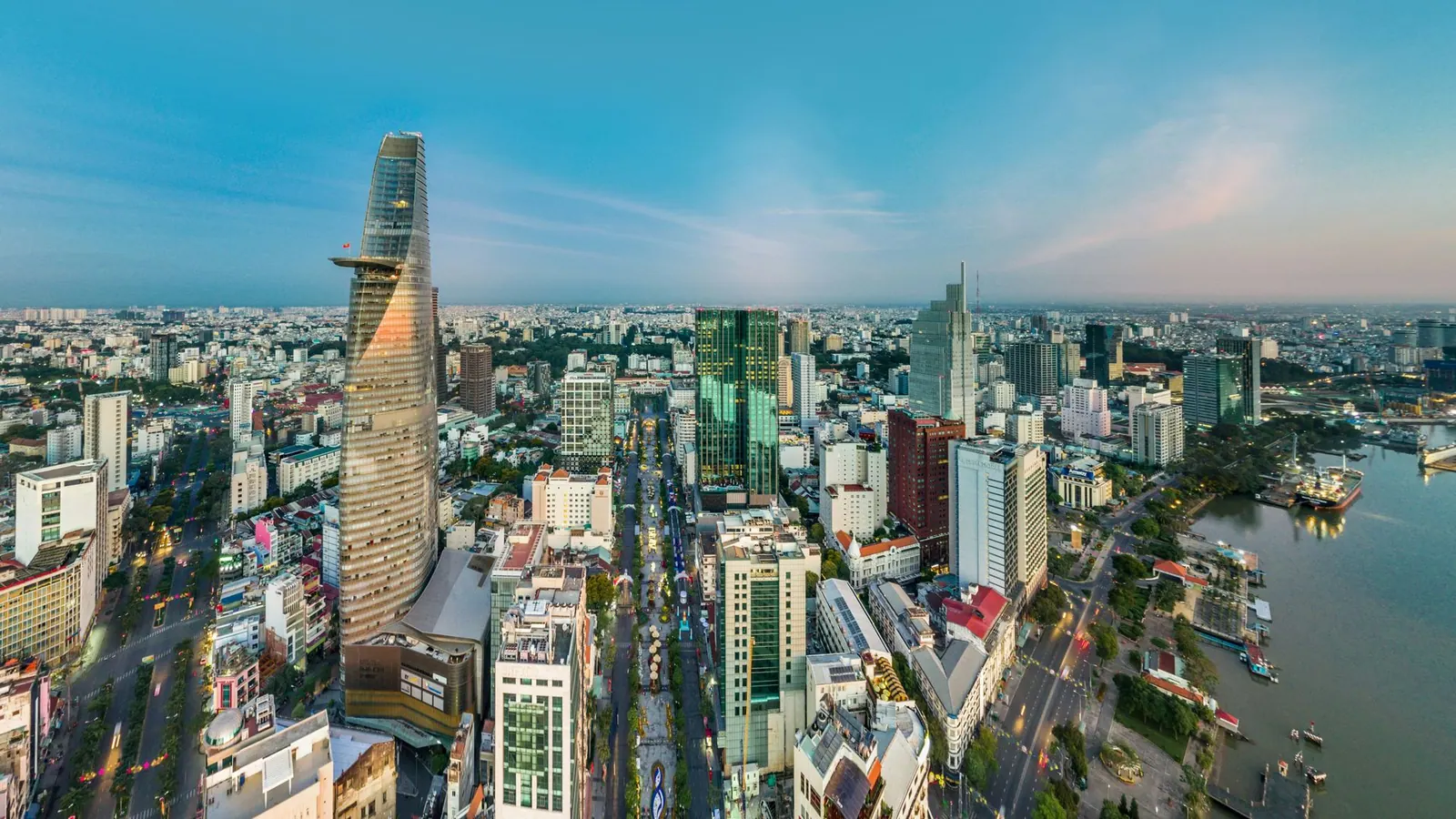
Saigon's skyline is best enjoyed from above. Chill Skybar on top of AB Tower offers 360° views and cocktails from 200,000 VND. The observation deck at Landmark 81 (Vietnam's tallest building) gives views from 370 metres, and Saigon Saigon Bar at the Caravelle has live music and history.
Landmark 81 entry 300,000 VND (~$12); go 5-6 PM for sunset.
Mekong Delta Day Trip
Two hours south, the “rice bowl” of Vietnam unfolds in a maze of rivers, floating markets, coconut farms and fruit orchards. A full-day trip visits the Cai Be or My Tho floating markets, rows you by sampan through narrow canals lined with water coconut palms, and stops at a coconut candy workshop - the essential escape from the city. For a deeper experience, spend a night at a homestay in Can Tho and visit Cai Rang, the largest floating market, at dawn.
Full-day tours 400,000-600,000 VND.
Cholon (Chinatown) & Vung Tau
With a spare day, explore Cholon, Saigon's Chinatown, taking in Thien Hau Temple and Binh Tay Market. Or escape to the beach town of Vung Tau, about 2 hours away by hydrofoil.
Old Saigon
District 1 and the Old Town
District 1 is Saigon's colonial core, where French colonial architecture stands beside sleek skyscrapers. The cathedral, the post office, the palace and Ben Thanh Market are all within walking distance of each other, making it the easiest part of the city to explore on foot.
Notre-Dame Cathedral & Central Post Office
The twin red-brick icons of French Indochina face each other across a leafy square in District 1. The cathedral (1880) is under restoration but its exterior is still photogenic. The Saigon Central Post Office - with its vaulted iron ceiling and old map murals, said to be designed by Gustave Eiffel's firm - still operates, so buy stamps and send a postcard from the wooden counters.
Both free to view; Post Office open 7 AM-7 PM. Dong Khoi Street, District 1.
Independence Palace (Reunification Palace)
The 1960s time capsule of the South Vietnamese government, famously breached by a North Vietnamese tank on 30 April 1975, ending the war. Tour the war rooms, reception halls, rooftop and the basement command bunker - largely unchanged since the fall of Saigon.
Entry 65,000 VND (~$2.60); 8 AM-4 PM.
Ben Thanh Market & Bui Vien Street
Ben Thanh is Saigon's most famous market, a bustling covered hall selling everything from coffee beans to lacquerware. The food section at the back serves excellent pho, banh xeo and fresh seafood. After dark the surrounding streets become a lively outdoor food market, and nearby Bui Vien - the backpacker strip - lights up with bars, live music and cheap beer. Touristy but unmistakably Saigon.
Open 6 AM-6 PM (night market outside until midnight). Bargain hard - first quotes are typically 3x the real price. For calmer shopping, try Tan Dinh Market in District 3.
Nguyen Hue Walking Street
The pedestrian boulevard is the natural end to a day in District 1 - walk up it at around 5 PM towards Bitexco and Chill Skybar for sunset drinks over the skyline.
A one-day walking route
- 8:30 AM: Notre-Dame Cathedral and the Central Post Office.
- 10:00 AM: Independence Palace.
- 12:00 PM: Banh mi lunch at Banh Mi Huynh Hoa.
- 2:00 PM: War Remnants Museum (allow 2 hours).
- 5:00 PM: Nguyen Hue Walking Street up to Bitexco and Chill Skybar for sunset.
Itinerary
How many days do you need in Ho Chi Minh City?
Two to three days covers the main sights - the War Remnants Museum, the cathedral, Ben Thanh Market and a Cu Chi Tunnels half-day trip. Add a fourth day for a Mekong Delta tour or to explore District 2 and District 7. This first-visit plan covers history, food, markets and a day trip.
Day 1 - Colonial Saigon & street food
Follow the District 1 walking route above: cathedral and post office, Independence Palace, banh mi at Huynh Hoa, the War Remnants Museum, then sunset drinks at the top of Nguyen Hue Walking Street.
Day 2 - Cu Chi Tunnels & Ben Thanh
- 7:30 AM: Half-day Cu Chi Tunnels tour (book through your hotel or a tour operator).
- 1:00 PM: Back in town for lunch at a local com tam stall.
- 3:00 PM: Ben Thanh Market for souvenirs and coffee.
- 6:00 PM: Street food crawl on Tran Khai Nguyen and Nguyen Trai streets.
Day 3 - Choose your adventure
- Option A: Full-day Mekong Delta tour (floating markets, coconut candy factory, rowboat ride).
- Option B: Cholon (Chinatown), Thien Hau Temple and Binh Tay Market.
- Option C: Day trip to the beach town of Vung Tau (2 hours by hydrofoil).
Transport
How to Get Around Ho Chi Minh City
Saigon is a city of motorbikes - crossing the road is a rite of passage (walk at a steady pace, don't stop, let them flow around you). The new Metro Line 1 is opening up, and ride-hail apps are the easiest way for visitors to get around.
- Grab & Xanh SMThe default for visitors - book cars or GrabBike taxis in the app with set fares. Car rides 30,000-80,000 VND ($1.20-3.20); bike from ~20,000 VND.
- Metro Line 1The city's first metro connects Ben Thanh to the eastern districts and Suoi Tien (District 9) - clean, air-conditioned and growing the network. Opened in 2024; fares 7,000-16,000 VND. Useful for the eastern suburbs, though most tourist sights remain in Districts 1-3.
- Motorbike taxiThe classic xe om - faster through traffic but agree the price first if you don't use the app.
- WalkingDistrict 1 (the colonial core, Ben Thanh, the river) is walkable, but the heat and the scooter seas make longer walks tough. Use pedestrian overpasses on big roads where available.
- CycloThe three-wheeled pedicab - a slow, scenic way to tour the old quarter. Negotiate the price upfront; mostly a tourist experience now.
Tan Son Nhat Airport (SGN) sits 7 km from the centre - a Grab is the smoothest transfer at 80,000-150,000 VND ($3-6). Metered Vinasun or Mai Linh taxis are similarly priced, and public bus 109 costs 20,000 VND ($0.80); allow 30-60 minutes depending on traffic. Head north by train, sleeper bus or flight to the lantern town of Hoi An and Da Nang, the island of Phu Quoc, or cross into Cambodia towards Phnom Penh.
Accommodation
Where to Stay in Ho Chi Minh City
Most visitors base themselves in District 1, the compact walkable core, or District 3 just north. Saigon offers superb value - stylish boutique hotels and rooftop pools for a fraction of Western prices.
District 1 - best for first-timers
The colonial heart and tourist hub - walking distance to Ben Thanh, the Post Office, the cathedral, the Opera House and the best restaurants and bars. The most convenient base for a short stay. Rooms run $10-150+/night.
District 3 - best for value & local vibe
Immediately north of District 1, leafier, quieter and cheaper, packed with local cafés, pagodas, street food alleys and the War Remnants Museum. A 10-minute walk or a short Grab into the centre. Rooms run $8-80/night.
Bui Vien / Pham Ngu Lao - best for nightlife & budget
The backpacker quarter in District 1 - hostels, cheap beer and late-night bars. Loud at night, so choose it if you came to party.
District 2 (Thao Dien) - best for a quieter, upscale stay
Across the river, the expat enclave of Thao Dien has riverside villas, international cafés and a calmer pace - good for longer stays and families, about 15 minutes by Grab from the centre. Rooms run $15-100/night.
District 7 (Phu My Hung) - best for families
A planned neighbourhood with wide streets, Crescent Mall and international schools. Very safe and clean. Rooms run $20-120/night.
Food & drink
What & Where to Eat in Ho Chi Minh City
Saigon is a street-food paradise and the birthplace of several dishes you'll now find worldwide. Eat from plastic stools and you'll eat best.
Banh mi - the legendary Saigon baguette sandwich, a French-Vietnamese fusion of crisp roll, pâté, cold cuts, herbs and chilli. Try the legendary Banh Mi Huynh Hoa (queue before noon). Pho - the fragrant beef noodle soup, here in a slightly sweeter southern style; Pho Hoa and Pho 2000 are Saigon institutions. Goi cuon fresh spring rolls and com tam broken rice with grilled pork, egg meatloaf and fish sauce are daily staples - com tam is a classic Saigon breakfast, best before 9 AM.
Don't miss hu tieu noodle soup, bun cha and the southern banh xeo sizzling crepe. Wash it down with Vietnamese iced coffee (ca phe sua da) - rocket-fuel-strong drip over condensed milk, about 15,000 VND at a streetside stall.
- Street stalls & marketsMeals 30,000-70,000 VND ($1.20-2.80) - the best food and the best prices. Follow the local lunch queues.
- Bui Vien & District 1The tourist core has everything from cheap pho to rooftop fine dining and craft cocktail bars.
- District 3 & 4Where Saigonites actually eat - deeper local flavours, fewer menus in English, worth the short ride.
Plan your trip
Practical Tips & Budget
UK and most EU passports get 45 days visa-free; US, Australian and Canadian passports need an e-visa ($25, up to 90 days, as of November 2026) - see our visa guide. The currency is the Vietnamese dong (VND) - everything is in the thousands, so keep the zeros straight. ATMs are everywhere; carry small notes for street food and taxis. Ride-hail apps make Saigon easy for first-timers.
How much does Ho Chi Minh City cost?
- Budget$20-35/day - hostel dorm ($6-12), street food ($1.50-3), GrabBike and a couple of museums.
- Mid-range$45-80/day - a boutique 3-4 star hotel with pool, sit-down meals and a Cu Chi or Mekong tour.
- Luxury$120+/day - a five-star river-view hotel, fine dining and private guiding.
Good to know
- Crossing the road: Walk slowly and steadily - never stop or step back. Make eye contact with drivers; scooters flow around you.
- Apps: Grab for everything; Xanh SM for pure-electric rides; Maps.me for offline nav.
- Scams: Avoid shoe-shine offers, overcharging cyclos and “closed temple” motorbike redirects. Ignore “friendly” touts near tourist sites steering you to massage parlours or restaurants, always confirm Grab fares in the app, and in taxis use Vinasun or Mai Linh and insist on the meter.
- Tap water: Don't drink it - use bottled or filtered. Ice in established places is generally safe.
- Pickpockets: Bag snatching by scooter riders is common - use a crossbody bag, keep bags zipped and phones tucked away in busy areas. The tourist police number is 113.
- Cash: Most places are cash-only, so withdraw VND. Count your change carefully as the notes look similar. Street food costs 20,000-50,000 VND ($0.80-2) and a beer on Bui Vien Street about 10,000 VND ($0.40).
- SIM cards: Buy a Viettel or Vinaphone tourist SIM at the airport (150,000-250,000 VND for 30 days of unlimited data). 4G coverage is excellent and most cafés and hotels have free Wi-Fi.
- Rainy season: Carry a compact umbrella and wear shoes you don't mind getting wet - streets flood briefly after heavy rain. Downpours usually last 30-60 minutes; cafés make perfect shelter.
Planning a wider route? Pair this with our 5 days in Vietnam itinerary and the Vietnam visa guide.