When to go
When is the best time to visit Yogyakarta?
Yogyakarta has a classic tropical climate with a clear dry season. The dry months from May to October are the best time - sunny, cooler in the highlands and ideal for Borobudur and Mount Merapi.
- May-OctDry season - the best time. Clear dawns for Borobudur, dry trekking and comfortable exploring.
- Nov-AprWet season - hot, humid and rainy, often in the afternoon. Greener rice paddies, fewer crowds and lower prices.
- Apr & NovShoulder sweet spots - mostly dry, fewer crowds and good value before the peak and rains.
Attractions
Things to Do in Yogyakarta
“Jogja” is the cultural and intellectual capital of Java - a sultanate city of batik, gamelan and street food, ringed by two of Indonesia's greatest sights: the Buddhist temple of Borobudur and the Hindu complex of Prambanan. Three days covers city and temples.
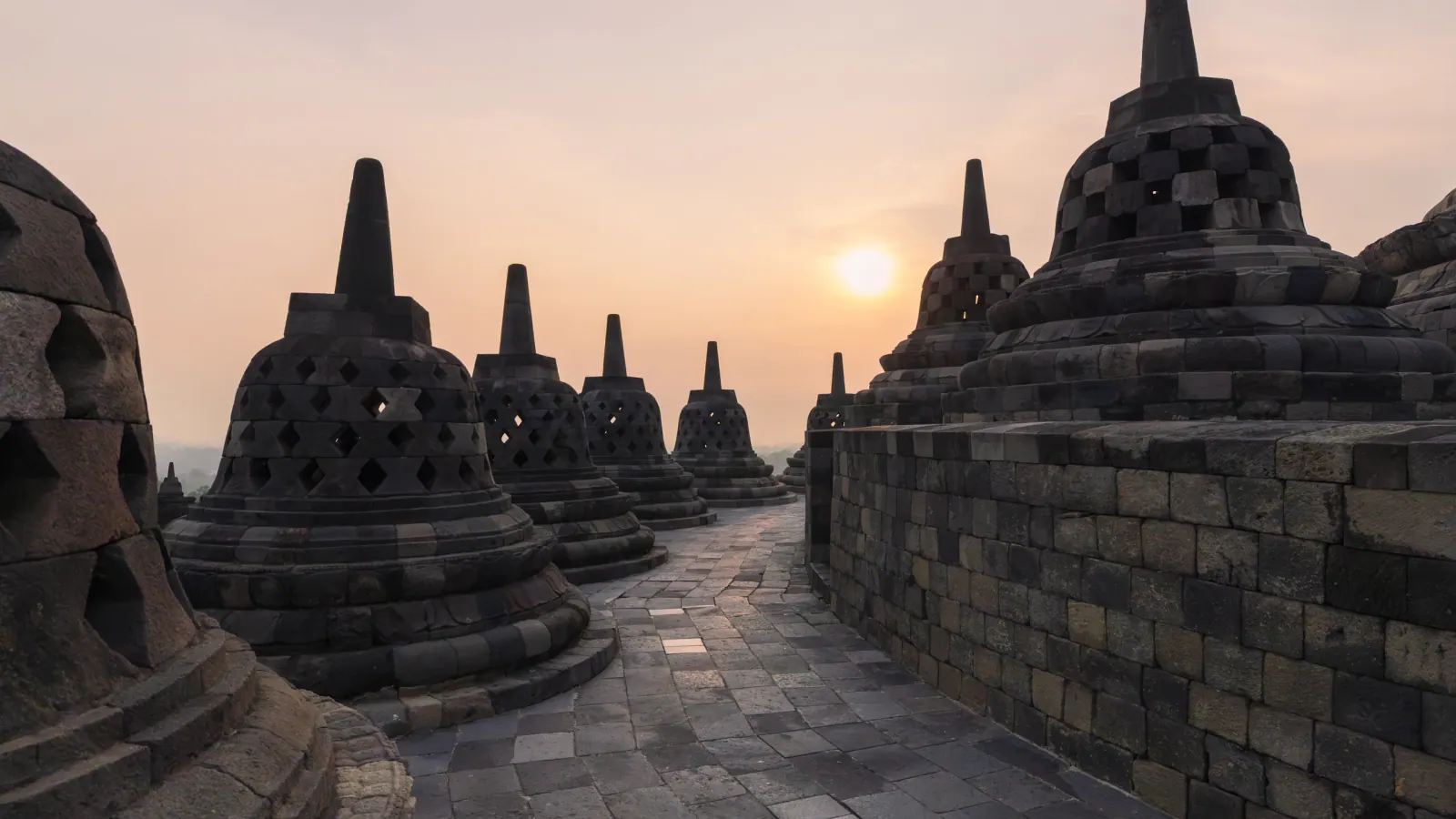
Borobudur Sunrise
The world's largest Buddhist temple and a UNESCO wonder - a stepped pyramid of stone reliefs and stupas on a hill above misty rice fields. Arrive before dawn to watch the sun rise over the volcanoes from the top terrace. One of Asia's great experiences.
Sunrise-entry ~500,000 IDR (~$31); standard entry ~50,000 IDR (~$3.10). 40 km from Jogja.
Prambanan Temple
A soaring 9th-century Hindu temple complex of pointed stone spires - the largest in Indonesia, decorated with Ramayana reliefs. Stunning at sunset, and the open-air Ramayana ballet performs here on summer evenings.
Entry ~368,000 IDR (~$23) for foreigners; Ramayana ballet tickets separate.
Kraton (Sultan's Palace) & Taman Sari
The living palace of the Sultan of Yogyakarta - a walled city-within-a-city of pavilions, royal regalia and gamelan performances. Pair it with the neighbouring Taman Sari water castle, the former royal bath complex.
Kraton entry ~15,000 IDR (~$0.95); Taman Sari ~15,000 IDR.
Malioboro Street & Batik
The famous shopping and street-food street - batik shops, horse-drawn andong carts, buskers and the legendary lesehan food stalls. The place to buy hand-stamped batik and eat gudeg by the roadside.
Mount Merapi Jeep Tour
A 4WD jeep ride up the slopes of Java's most active volcano - through lava fields, destroyed villages and alien volcanic landscape left by the 2010 eruption. Sunset or sunrise departures are the most dramatic.
Jeep tours from ~350,000 IDR (~$22) per jeep.
Jomblang Cave & Timang Beach
Two adventurous day trips south of town: the single-ray-of-light dawn descent into the ancient Jomblang sinkhole cave, and the dramatic Timang Beach gondola ride across the waves on a hand-cranked cable car. For the thrill-seekers.
Transport
How to Get Around Yogyakarta
Jogja is a flat, scooter-friendly city with cheap transport. The centre is walkable; the temples and volcanoes need a driver or a tour.
- Gojek & GrabThe default - app motorbikes and cars with set fares. Motorbike rides from ~10,000 IDR ($0.60).
- Scooter rental~70,000 IDR ($4.30)/day - the most flexible way to temple-hop. Helmets required.
- Private driverBest for the Borobudur-Merapi-Prambanan circuit - ~600,000-800,000 IDR ($37-50)/day all-in.
- Andong & becakThe traditional horse-cart and cycle-rickshaw - charming for short sightseeing hops; agree a price first.
Yogyakarta Airport (YIA) has flights from Bali, Jakarta and Bandung, or take the train across Java - one of Asia's great scenic railway journeys.
Accommodation
Where to Stay in Yogyakarta
Jogja has superb value - boutique Javanese guesthouses for very little. Stay near the Kraton or on Malioboro for convenience.
Near Malioboro & Tugu - best for first-timers
The central hotel and shopping district - walking distance to Malioboro, the station and the markets. The practical base.
Prawirotaman - best for budget & character
The leafy heritage guesthouse district south of the Kraton - boutique Javanese inns, cafés and batik studios. Charming and good value.
Near Borobudur (Manohara) - best for the sunrise
A handful of hotels sit inside the Borobudur park - the only way to enter before the sunrise crowds. Book well ahead.
Food & drink
What & Where to Eat in Yogyakarta
Javanese food is sweet, complex and famously cheap - Jogja is one of the best-value food cities in Indonesia. Eat on the pavement at the lesehan stalls.
Gudeg - Jogja's signature dish, young jackfruit slow-cooked in coconut and palm sugar, served with rice, egg and chicken. Sate klathak - the famous grilled goat satay. Soto and bacem sweet-spiced tofu.
Try the royal-style nasi kucing (tiny rice portions), kopi joss (coffee with a burning charcoal), and finish with wedang ronde ginger drink on Malioboro.
- Malioboro lesehan stallsThe classic Jogja dinner - sit on mats, eat gudeg and grilled satay from a few thousand rupiah.
- AngkringanThe humble street carts selling nasi kucing, snacks and kopi joss - the soul of Javanese street life.
- Tugu / Prawirotaman cafésRefined Javanese and international dining - good for a sit-down dinner.
Plan your trip
Practical Tips & Budget
Most passport holders need a visa on arrival or e-VOA (IDR 500,000, about US$30, as of November 2026; a higher fee has been announced) for 30 days, extendable once; only ASEAN nationals enter visa-free. See our SE Asia visa guide. The currency is the rupiah (IDR). English is spoken in tourist spots; Jogja is one of the cheapest, friendliest cities in Indonesia.
How much does Yogyakarta cost?
- Budget$18-30/day - hostel or guesthouse ($8-15), lesehan meals ($1.50-3), scooters and temples.
- Mid-range$35-65/day - a boutique guesthouse, a Borobudur sunrise ticket and a Merapi jeep tour.
- Comfort$80+/day - a Javanese heritage hotel and private guiding.
Good to know
- Borobudur sunrise: The early Manohara entry is quota-limited - book ahead; the standard gate opens at 6 AM.
- Temples: Borobudur and Prambanan have separate ticket systems - a combo pass can save money.
- Dress: Cover shoulders and knees at temples; sarongs are often provided.
- Heat & ash: Merapi can be active - check conditions before the jeep tour.
- Apps: Gojek for rides and food; cash for markets and small stalls.