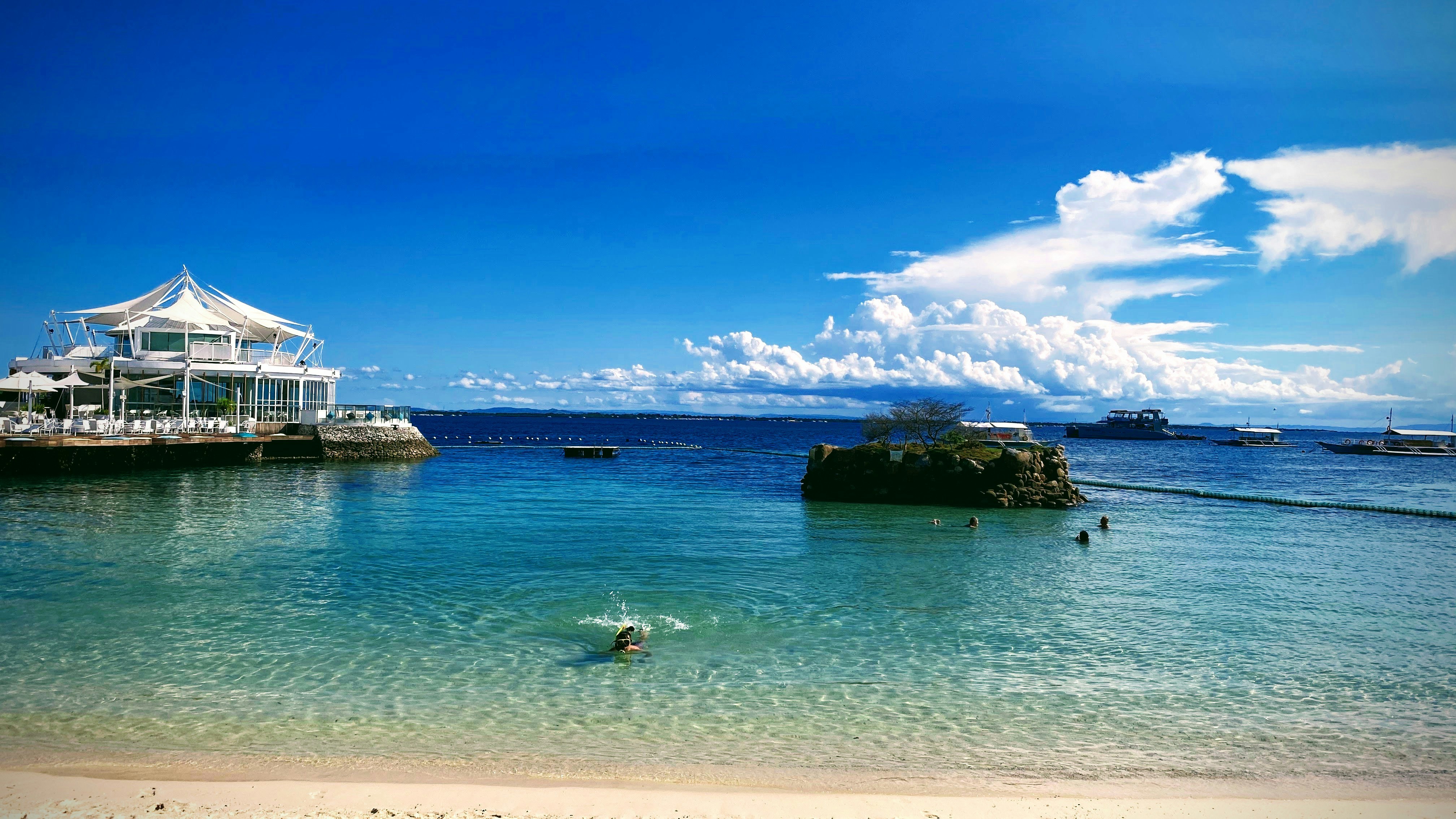
Coron is a municipality on Busuanga Island in the northern part of Palawan province, Philippines. It is one of the most celebrated diving and island-hopping destinations in Southeast Asia, known worldwide for the twelve Japanese warships sunk by a US Navy air raid on 24 September 1944. These wrecks — including the Akitsushima seaplane tender, the Irako refrigeration ship and the Kogyo Maru freighter — sit at depths of 10 to 40 metres in Coron Bay, blanketed in coral growth and teeming with marine life, making Coron one of the top wreck diving sites on earth.
Beyond the wrecks, Coron's defining feature is its landscape of razor-sharp limestone karst islands rising vertically from turquoise water. Coron Island itself is the ancestral domain of the Tagbanua, one of the oldest indigenous peoples of the Philippines. Access to the island requires a permit, and the Tagbanua carefully manage tourism to protect their territory. On Coron Island you find Kayangan Lake, frequently cited as the cleanest lake in Asia, where visibility reaches over 40 metres through water layered above ancient limestone formations. Nearby Barracuda Lake is famous for its unusual thermocline: divers descend through warm surface water at 28 degrees Celsius into a hot layer reaching 38 degrees, heated by volcanic vents beneath the lake bed.
The Twin Lagoon, also on Coron Island, consists of two bodies of water connected by a narrow underwater passage through a limestone wall. At low tide visitors swim through the gap; at high tide a wooden ladder and platform allow passage over the rock. Other highlights include Maquinit Hot Springs, one of only a handful of natural saltwater hot springs in the world, heated by an underground volcano and situated along the coast with views across Coron Bay. Black Island (Malajon Island) features a hidden cave beach adorned with stalactites, while Pass Island reveals a disappearing sandbar that only emerges at low tide.
Coron Town serves as the base for most visitors. It is a small, walkable settlement with a growing number of hotels, restaurants, and dive shops concentrated along the waterfront and National Highway. Mount Tapyas, directly behind the town, offers a 724-step climb to a hilltop cross with panoramic views of Coron Bay at sunset. The seagrass meadows around Coron support an endangered dugong population, and snorkelling trips to the shallow Skeleton Wreck — a Japanese gunboat encrusted in coral in just three metres of water — are accessible even to non-divers.
Access to Coron is via Francisco B. Reyes Airport (USU) on Busuanga Island, served by flights from Manila, Cebu and Clark. The best time to visit is during the dry season from November to May, with March to May being warmest and December to February offering the most comfortable conditions.