When to go
When is the best time to visit Vang Vieng?
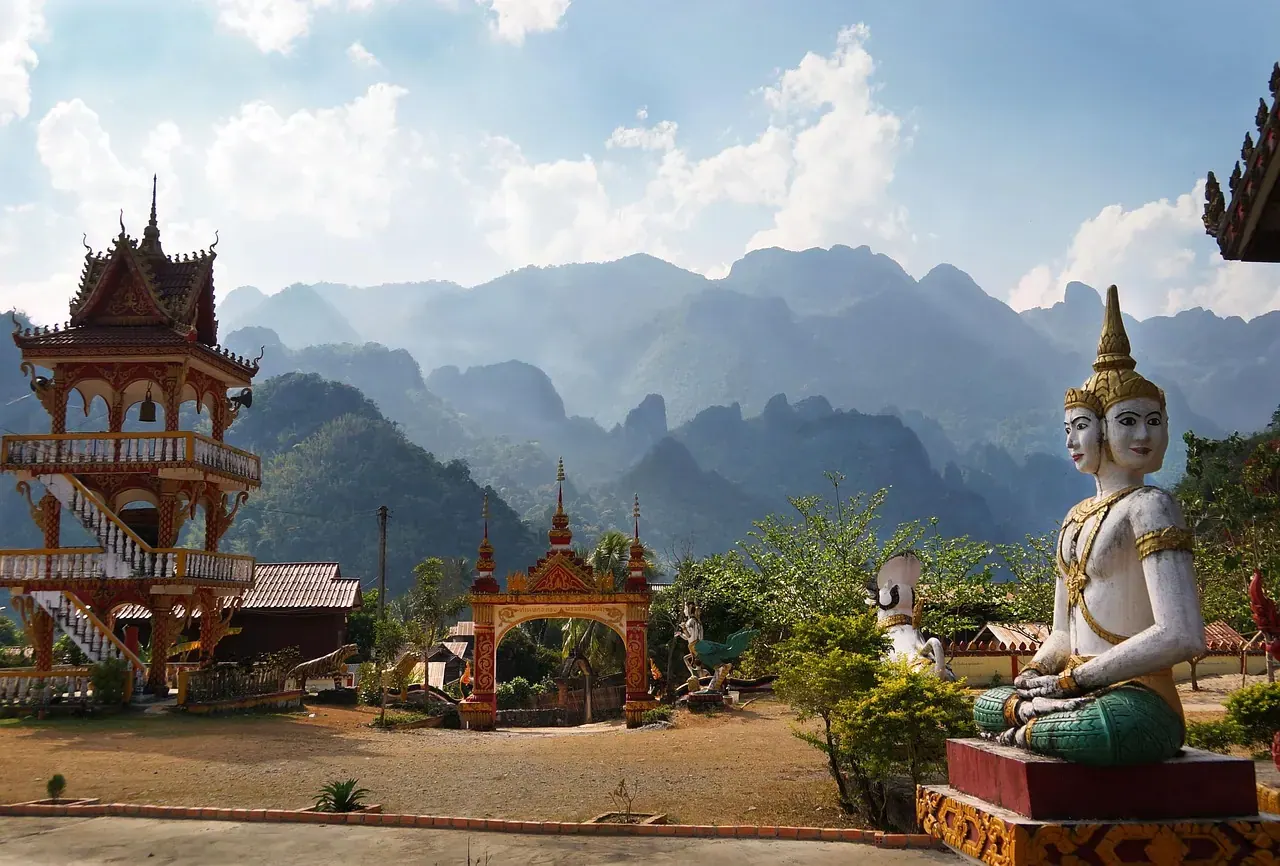
Vang Vieng sits in a valley of limestone karsts north of Vientiane, with a hot dry season and a wet monsoon. The dry months from October/November to April are best - clear skies for the famous viewpoints, tubing and caves. November to February is cool and peak; March to May is hot. The wet season (May to September) turns the paddies and mountains vivid green and swells the river, but viewpoints can cloud over and trails get muddy.
- Nov-FebCool & dry - the best time. 18-28 °C, clear karst views, prime for hiking and kayaking. Peak season.
- Mar-AprHot & dry - hazy but good for river activities and lower prices before the rains.
- May-SepWet season - lush and green with heavy rains. Quietest and cheapest; river high for tubing, viewpoints often clouded.
Attractions
Things to Do in Vang Vieng
Once notorious for full-moon river tubing, Vang Vieng has grown up into Laos's top adventure hub - kayaking, caving, hot-air balloons and some of Southeast Asia's most dramatic scenery.
Nam Song Kayaking & River Tubing
Float or paddle the Nam Song between towering karst cliffs and rice paddies. The famous tubing is now calmer and safer; kayaking day-trips are the more scenic option.
Tubes ~$5-8; kayaking trips ~$15-25.
Blue Lagoons & Caves
A series of jewel-blue spring-fed pools at the base of the karsts (Blue Lagoon 1, 2, 3) with rope swings, ziplines and swimming - each backed by a cave to explore with a head torch (Tham Phu Kham is the most famous, with a hidden Buddha inside).
Viewpoint Hikes (Nam Xay & Pha Ngern)
Steep short climbs up the karsts to jaw-dropping panoramas of jagged peaks and the river valley - the iconic Vang Vieng postcard view. Best at sunrise or sunset. Nam Xay is the classic; Pha Ngern is longer and quieter.
Trail fee ~15,000-50,000 kip (~$1-3); allow 1-3 hrs.
Hot-Air Balloon Ride
One of the cheapest places in the world to balloon - drift over the karst labyrinth at dawn for an unforgettable perspective. Weather-dependent; book a day ahead.
~$80-100/person for a sunrise flight.
Buggy & Scooter Tours
Rent a scooter or a rugged off-road buggy to explore the dirt tracks to lagoons, villages and viewpoints across the river - the best way to cover ground beyond the town.
Tham Chang Cave & Riverside Caves
An easy cave with a viewpoint right in town, plus tubing-through-cave tours where you float on a tube down underground rivers. Bring a head torch and expect to get wet.
Transport
How to Get to & Around Vang Vieng
Vang Vieng is midway between Vientiane and Luang Prabang on the new Laos-China railway, making it an effortless stop on any Laos loop.
- High-speed trainThe fast way - ~1 hr from Vientiane and ~1 hr from Luang Prabang on the LCR railway. The station is 6 km from town.
- Bus / minivan~3-4 hrs from Vientiane or Luang Prabang ($6-12); the scenic Vientiane-Vang Vieng road winds through the mountains.
- Scooter / buggyThe best way around the lagoons and viewpoints - rent in town (~$6-10/day for a scooter, ~$40/day for a buggy).
- Tuk-tukFor lagoon and cave hops if you don't ride - $2-3 per hop, or ~$15-25 for a half-day charter.
- BicycleFlat valley roads make cycling to the nearer lagoons a breeze (~$2-3/day).
Continue north to Luang Prabang or south to the capital, Vientiane.
Accommodation
Where to Stay in Vang Vieng
The town has bloomed with riverside resorts and infinity-pool hostels - many with karst views that rival anywhere in Asia.
East-bank riverside - best for karst views
Across the Nam Song from town, the infinity-pool resorts and bungalows front the famous karst panorama - the splurge pick and the postcard view.
Town centre - best for convenience
Guesthouses, hostels and cafés around the main strip - walk to restaurants, tour shops and the bars.
Budget hostels - best for backpackers
Some of Laos's best social hostels from ~$6-12/night, often with pools and organised tubing and party nights.
Food & drink
What & Where to Eat in Vang Vieng
The food scene blends classic Lao cooking with backpacker favourites - cheap, cheerful and geared to long days in the outdoors.
Laap, tam mak hoong (papaya salad) and khao soi noodles feature everywhere, alongside grilled Mekong fish and sticky rice. The town also does great Western comfort food (pizzas, burgers, smoothie bowls) for the backpacker crowd.
- Riverside restaurantsKarst-view dining for sunset Beerlao and Lao dishes, plus Western menus.
- Town market & street stallsThe cheapest local eats - noodle soups, grilled meats and fruit shakes.
- Cafés & bakeriesCoffee, sandwiches and smoothie bowls for breakfast before a day in the caves.
Plan your trip
Practical Tips & Budget
Visas, currency and language are as for the rest of Laos: a visa-on-arrival (about US$40 for most passports) or e-visa, kip as the main currency (USD and Thai baht accepted), and basic English at tourist businesses. Vang Vieng is geared to adventure - bring sturdy shoes, a head torch for caves, reef-safe sunscreen, and choose reputable operators for tubing and caving.
How much does Vang Vieng cost?
- Budget$15-30/day - hostel dorm, market meals, a tube and a lagoon or two.
- Mid-range$35-60/day - a riverside bungalow, a kayak trip and a balloon or zipline.
- Luxury$80+/day - an infinity-pool karst-view resort with private touring.
Good to know
- Safety: the old tubing party scene led to accidents - stick to the calmer modern version and reputable operators; never drink and swim.
- Footwear: bring grippy shoes for viewpoint hikes and caves; a head torch is essential underground.
- Weather: viewpoints are best early - cloud often builds by late morning in the wet season.
- Book the balloon: hot-air flights are weather-dependent and popular - reserve a day ahead.
- Cash: carry kip for small purchases; ATMs are in town but can run low.
Ready to plan a route? Pair this with the Laos budget travel guide, then ride the railway to Luang Prabang or Vientiane.